
Using examples? Check. Identifying transferrable skills? Check. STAR technique? Check.

SO WHY AM I STILL GETTING TOLD THAT MY COMPETENCY ANSWERS DON’T STAND OUT?!?!?!
Enter the “Zero To Hero“ Technique: the one thing that gets your competency answers from mediocre to unforgettable. So simple, yet so powerful.
The idea behind this technique is easy to grasp: let’s use two examples to illustrate the point.
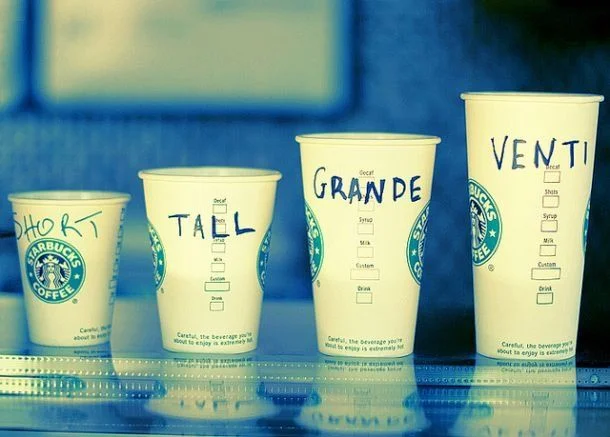
Image from https://www.quora.com/Who-made-up-the-cup-size-names-at-Starbucks-and-what-if-anything-are-these-names%E2%80%99-significance-i-e-what-do-they-mean
We got two candidates writing in with their applications: Ariana Venti and Bobby Beige. Same credentials, same experience, same everything.
Ariana Venti: “I am good at working in a team. This is exemplified by the time when I worked in a team of 4 as the Treasurer of Clarence University’s Pro Bono Society. In that role, my team and I got on very well and we were very successful in organising events such raising £500 in a cake bake sale and 8 Legal Advice Clinics over one year.“

Bobby Beige: “I am good at working in a team. This is exemplified by the time when I worked in a team of 4 as the Treasurer of Clarence University’s Pro Bono Society. In that role, there was a time when my team and I had to plan a set of 8 Legal Advice Clinics. After the 3rd Clinic, the lead coordinator, who was the main person-in-charge of this project, suddenly stopped doing her part. As a result, the 4th Clinic had very poor turnout, which jeopardised the Society’s reputation. Despite disagreements with the rest of my team, I encouraged them to reach out to her in a friendly rather than accusatory manner, and to understand whether we could help her with anything. After a few attempts at contacting her, we realised that she was unhappy with the direction that the Society was heading in, namely focusing too much on fundraising rather than the Clinics. Empathising with her perspective, we reassured her that the funding was essential for outreach, which in turn would enable her to run the Clinics with maximum impact. Seeing the connection between fundraising and her own work, she became much more invested in her role, resulting in the subsequent Clinics having the highest turnout in the Society’s history.“
Who did it better, Ariana or Bobby? Sure it’s Bobby, but why?

Apart from the obvious point that Bobby gave more detail (which is preferable as long as you have enough wordcount), Ariana’s answer was a story that didn’t have much development: the situation she described went from pretty great at the beginning to… well, pretty great at the end too. It was a plateau, not an upward gradient; there was no progression. By contrast, Bobby’s situation went from pretty bad to pretty good. Graduate Recruitment can much more clearly see Bobby’s teamwork skills: after all, the only way you can really get to see a person’s true abilities is if you put them in challenging situations that push them to their limits!

Think about the last time you picked up a novel (if you’re a law student, you might have to dig a bit further back… perhaps childhood??!!). What’s more compelling: the story of somebody who’s got it all, no hardships or struggles towards success… or someone who’s had to overcome almost-impossible obstacles to reach a hard-earned destination? You already know the answer.
It’s simple human psychology: graduate recruitment are humans too, and all humans love a good story, full of thrill, close shaves and car chases. The Zero To Hero rule is really just an application of this simple psychology to your law firm applications (potentially minus the car chase bit!) - but a profound one that raises your application miles above the rest.