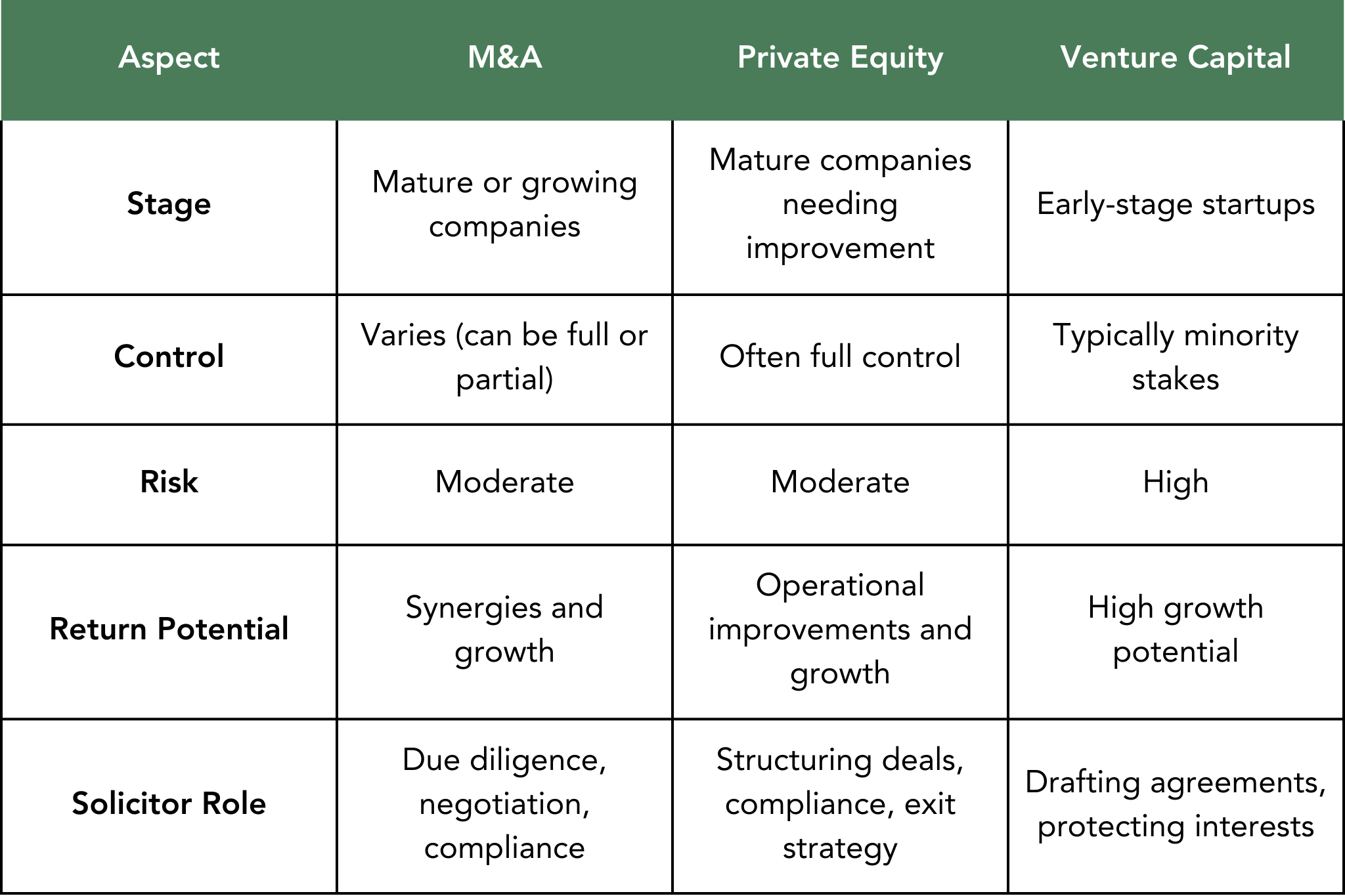
Impress at your next assessment centre by demonstrating how mergers and acquisitions, private equity and venture capital differ from each other.
Mergers and Acquisitions (“M&A”)
Overview:
M&A involves the consolidation of companies or assets through various types of financial transactions. These can include mergers, acquisitions, consolidations, tender offers, and management acquisitions.
Key Characteristics:
Purpose: M&A activities are primarily aimed at achieving growth, gaining competitive advantages, or realising synergies.
Types of Transactions: Mergers combine two companies into one, while acquisitions involve one company purchasing another.
Legal Considerations: M&A transactions require thorough due diligence, negotiation of deal terms, and drafting of acquisition agreements.
Role of Solicitors:
Solicitors in M&A play a crucial role in advising clients on legal, financial, and regulatory aspects. They assist in conducting due diligence, negotiating terms, and ensuring compliance with relevant laws.
Private Equity (“PE”)
Overview:
Private equity involves investing in private companies or buying out public companies to make them private. The goal is to improve the company’s performance and eventually sell it at aprofit.
Key Characteristics:
Investment Focus: PE firms typically invest in mature companies that may be underperforming or require operational improvements.
Control: PE firms often acquire a controlling interest, allowing them to influence management and strategic decisions.
Exit Strategy: The aim is to sell the company at a higher value after improving its operations and financial performance.
Role of Solicitors:
Solicitors in PE transactions help structure deals, conduct due diligence, and negotiate investment terms. They also advise on regulatory compliance and exit strategies.
Venture Capital (“VC”)
Overview:
Venture capital is a form of private equity focused on investing in early-stage startups with high growth potential. VC firms provide capital in exchange forequity stakes.
Key Characteristics:
Investment Focus: VC firms target startups in forward-looking, innovative industries like technology, biotechnology, and clean energy.
Risk and Reward: VC investments are high-risk but offer the potential for substantial returns if the startup succeeds.
Involvement: VC investors often take an active role in guiding the company’s growth and development.
Role of Solicitors:
Solicitors in VC transactions assist with drafting term sheets, investment agreements, and shareholder agreements. They ensure that the interests of both investors and startups are protected.
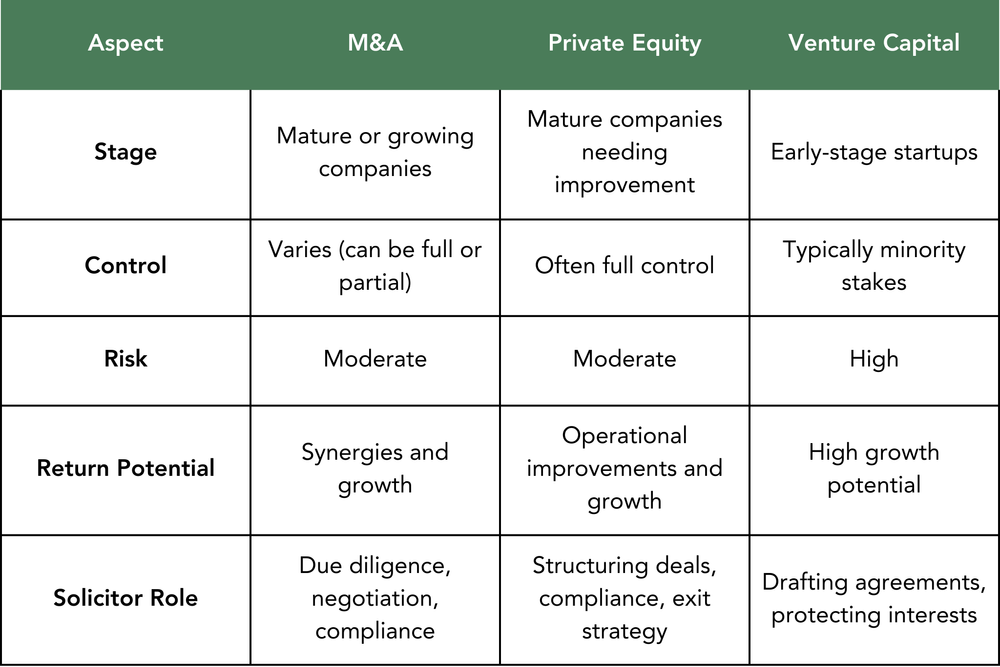
At a Glance