
As a future commercial solicitor at a top City firm, you’ll be expected to demonstrate your ability to understand key financial metrics of the target company at M&A case studies within assessment centres. In real life, although lawyers are not expected to be able to do so to the level that bankers and accountants can, they must be able to hold a meaningful conversation with these financial professionals and understand at least simplified financial statements in order to ensure the legal advice and services they provide is in line with the commercial realities and the client’s intended commercial objectives. This article gives you a quick breakdown of key metrics you might be expected to tease out from your case study document pack.
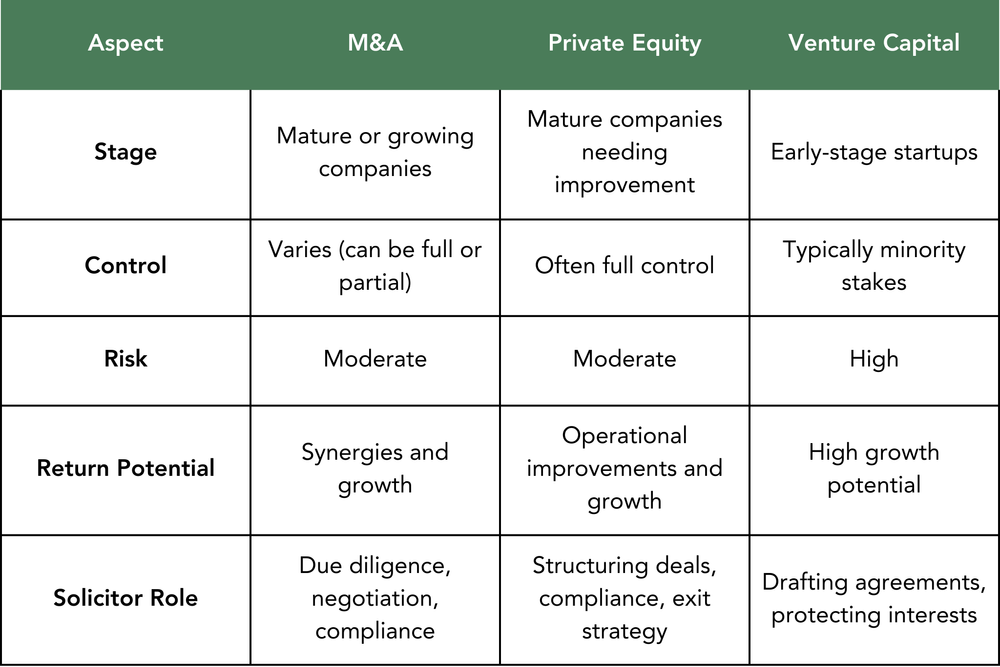
M&A vs Private Equity vs Venture Capital: A Guide for Aspiring Commercial Solicitors
Common Risks in M&A Scenarios: A Guide for Aspiring Commercial Solicitors
M&A transactions come with common risks which can jeopardise the success of a transaction and are essential considerations during your case studies. As an aspiring commercial solicitor preparing for assessment centres, demonstrating a good grasp of these risks and suggesting mitigation methods will help you stand out as a candidate that thinks commercially, practically and has an understanding of how deals work in practice.
Identifying Common Red Flags in M&A Case Studies
As most case studies revolve around M&A scenarios, you will be expected to spot both green flags (i.e. positive factors that point to the proposed deal being a good idea) and red flags (i.e. adverse factors that suggest the proposed deal should be approached with caution or aborted altogether).
Most case studies throw up similar green and red flags, and this article provides a low-down of the most common red flags indicating a proposed M&A transaction to be good for the buyer.
You may want to use this article as a mental tick-list during your case studies to ensure that you aren’t missing any potential risks!
Identifying Common Green Flags in M&A Case Studies
As most case studies revolve around M&A scenarios, you will be expected to spot both green flags (i.e. positive factors that point to the proposed deal being a good idea) and red flags (i.e. adverse factors that suggest the proposed deal should be approached with caution or aborted altogether).
Most case studies throw up similar green and red flags, and this article provides a low-down of the most common green flags indicating a proposed M&A transaction to be good for the buyer. In real life, these green flags need to verified through due diligence and the buyer would be wise not to take publicly-available information or the seller/target at their word. In a case study scenario, you will be expected to dig deep into the document pack to verify and substantiate what you believe to be a green flag.
You may want to use this article as a mental tick-list during your case studies to ensure that you aren’t missing positive indicators!